Do I Have Anxiety? Take This Quick Test to Find Out
Do you often feel overwhelmed, restless, or constantly on edge? Do your thoughts spiral, or do you struggle to relax even when nothing is wrong? These could be signs of anxiety. If you’ve been wondering “Do I have anxiety?” this quick test can help you gain clarity.
Anxiety can take many forms, from persistent worry to physical tension, avoidance, or racing thoughts. This self-assessment helps you recognize your patterns and better understand how anxiety may be affecting your life.
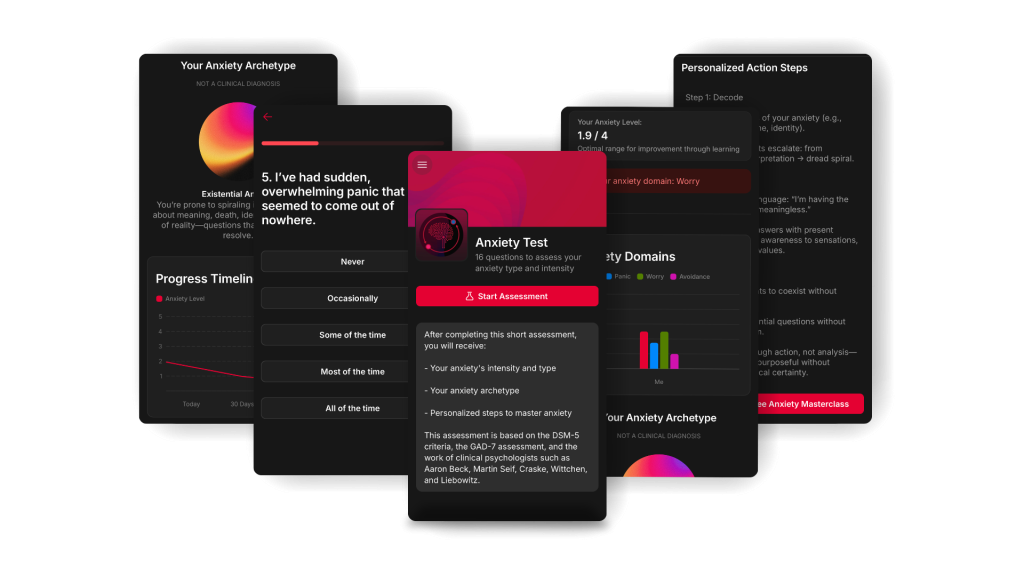
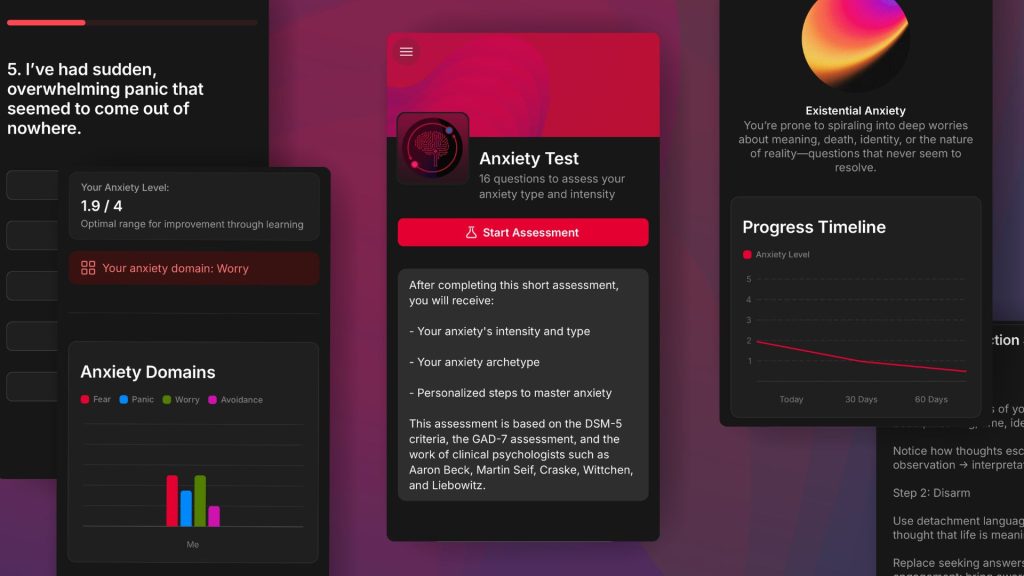
This test looks at emotional, mental, and behavioral signs that often appear with anxiety. You’ll answer simple questions about your recent experiences. Based on your responses, you’ll receive a clear summary of your results along with practical next steps.
The quiz takes around three minutes. Your results are immediate and focused on insight, not judgment.
Why Ask “Do I Have Anxiety?”
Anxiety is one of the most common mental health challenges, yet many people struggle for years before recognizing it. Understanding your patterns can help you take action, improve your well-being, and stop blaming yourself for feelings that come from deeper causes.
Taking a test like this can help you:
Understand what type of anxiety you may be experiencing
Separate typical stress from more persistent anxiety
Recognize how your body and mind respond to pressure
Reflect on how these patterns impact your daily life
You don’t need to feel broken or in crisis to take this seriously. Insight is valuable at every level of the spectrum.
Anxiety often hides behind everyday habits. You may find yourself:
Avoiding certain places or conversations
Replaying moments or worrying about the future
Feeling tense, jumpy, or physically drained
Struggling to sleep or focus
These signals can point to something deeper than ordinary stress. This quiz helps bring those patterns into focus so you can respond with clarity and self-awareness.
Systems designer and bestselling author Ryan A Bush synthesizes the best clinical data on anxiety into a comprehensive and actionable process.
Integrating the insights of:
Martin N. Seif, PhD
Founder of the Anxiety and Depression Association of America and author of What Every Therapist Needs to Know About Anxiety Disorders
Judith S. Beck, PhD
CBT pioneer, author of Cognitive Therapy: Basics and Beyond, and President of the Beck Institute for Cognitive Behavior Therapy.
David A. Carbonell, PhD
Clinical Psychologist specializing in anxiety treatment and author of The Worry Trick and the Panic Attacks Workbook
What You’ll Get
Once you complete the quiz, you’ll receive:
A summary of your anxiety level
Information about the most dominant form of anxiety (such as panic, worry, or avoidance)
Gentle guidance on possible next steps or reflection points
You can take this test privately. No email, signup, or data collection is required.
You may benefit from this test if you:
Regularly feel overwhelmed or uneasy
Often question your reactions or feel out of control emotionally
Experience tension, dread, or overthinking
Want to better understand your mind and emotional habits
This test is a useful step for anyone curious about their mental health or exploring personal growth.
Your Personalized Process: Decode. Disarm. Dismantle.
Once your dominant anxiety type is identified, you receive a custom protocol built from The Anxiety Algorithm Program. Each is structured in three stages.
Decode You begin by mapping your anxiety system using a four-node model.
What sets it off
How it feels in your body
What thoughts it activates
And what actions you take to avoid or manage it
This turns vague emotional chaos into a structured, observable loop.
Disarm Here, you learn to change how you relate to the anxiety. Not by calming it down, but by letting it activate without fueling it. You’ll practice:
Cognitive defusion techniques (noticing your thoughts rather than engaging them)
Interoceptive exposure (learning to tolerate anxious sensations)
Voluntary discomfort and mindfulness-based distancing
Dismantle Finally, you begin to reverse the loop entirely. You confront the situations or emotions you’ve avoided. You remove the safety behaviors that have kept the system intact. And you use exposure not to prove you can survive anxiety, but to show your brain it’s no longer needed.
This process isn’t about pushing through anxiety with willpower. It’s about removing the conditions that keep it necessary.
frequently asked questions
How do I know if this is the right quiz for me? This test is designed for people asking themselves whether anxiety might be playing a role in their life. It works well for both mild concerns and more intense feelings.
How accurate is the result? The quiz is based on common psychological patterns and provides a thoughtful overview of your responses. For clinical support, follow up with a licensed mental health professional.
Will I need to share personal information? No. Your answers are private and nothing is saved or shared.
What happens after I finish? You’ll see a summary of your anxiety profile and receive suggestions for reflection or further action. You can explore next steps on your own timeline.